
“I find myself often in disbelief — at how beautiful life can be, the opportunities that come my way, at the darkness that ails my family and loved ones, how I wish politics wouldn’t be so personal,” says Kuwaiti-born, Albuquerque-based artist, author and illustrator Zahra Marwan.
Her upcoming show negotiates this realm of disbelief. Its title — Is There a Horse on Your Roof? — comes from Maurice Sendak’s debut children’s picture book, Kenny’s Window, which tells the story of a young boy’s quest to find the magical garden he dreams about, helped along the way by his toys in a blend of realism and imagination. To Marwan, the book is a meditation on loneliness and love in a dream-like world.
The artist points to a passage from the book:
“There is a horse on the roof,” said Kenny, waking up in the middle of the night, “and I won't tell mama or papa. They would say it was a dream or what nonsense or some such thing and of course they wouldn't go up and see for themselves.”
For her, Kenny’s story is tied to her own experience of the unfolding of the U.S.-Israeli war on Iran, and the isolation caused by inhabiting a reality that others can’t readily understand.
“‘How are you?’ Strangers would ask me while I was contending with language and wondering if the neighborhoods my family live in are really in a war,” the artist says. “One thousand attacks on my little country in six weeks; it felt like I was speaking nonsense to strangers in my agitation.”
She hears echoes of her experience in Sendak’s book, blurring the line between reality and unreality, and an inability to communicate from that liminal space.
“I won't tell mama or papa. They'd say it was a dream. They don't know how to listen in the night.”
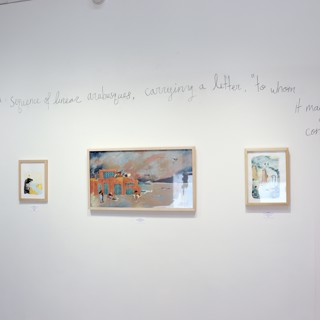
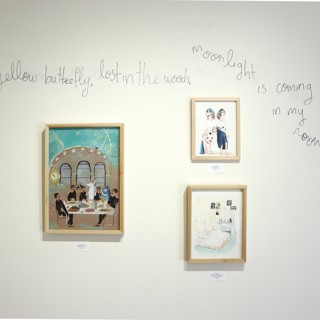
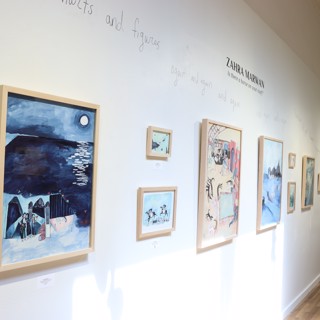
Her tender, jewel-like paintings offer moments of grounding and respite from the grief, fear, and chaos, capturing moments of personal connection:
I listen to Maria at the Zamora family party.
With my brother in the Pecos river.
"Habibti-joon," my aunt called me last week, "don't be scared." I hear the sirens and go to sleep.
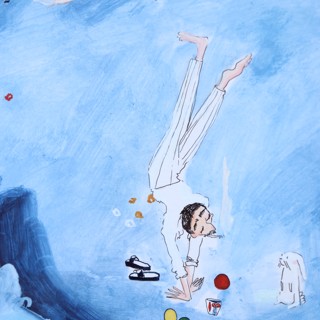
These are the people and moments that offer a sense of home, of safety, humor, and gentleness when everything is called into question. Marwan’s work is at once deeply personal, populated by the people, places and memories of her own life, and universal, inviting viewers to reflect on moments of beauty and connection in their own lives. It carries a profound sense of reverence for the fleeting instances of love and care that reconnect us with our humanity, even in the darkest times.
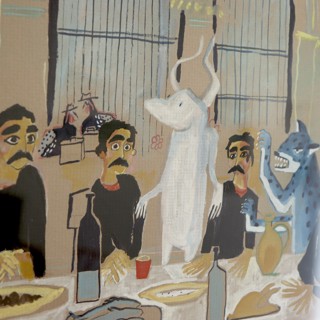
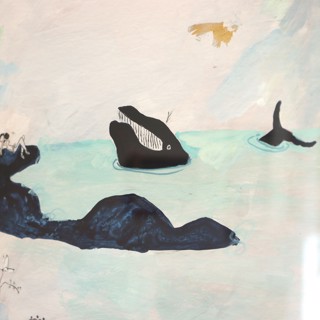
“What sustains me, and continued to sustain me during the war (was it a war?) are loving relations,” Marwan says. “The quiet moments with people. People whose hearts are in the right place. And the ocean of patience I maintain with social decorum living in a place actively inflicting harm on my home, while unable to live in the place my family always belonged. Navigating grim politics between one nation to another, I acclimate to beauty among the grief.”